
When Speaking Up Feels Dangerous: Part Three – Twenty‑Six Years Inside: The Major’s Lawsuit Against WCSO
Part Three examines how a 26‑year veteran of the Sheriff’s Office says the culture shifted around him after he reported misconduct, detailing the reassignment, isolation, and retaliation he describes in his federal lawsuit. It’s the inside view of the same pattern already alleged from the outside.
CITIZENS STORIES AND SUBMISSIONS2026
Florida Sunshine
4/30/20266 min read
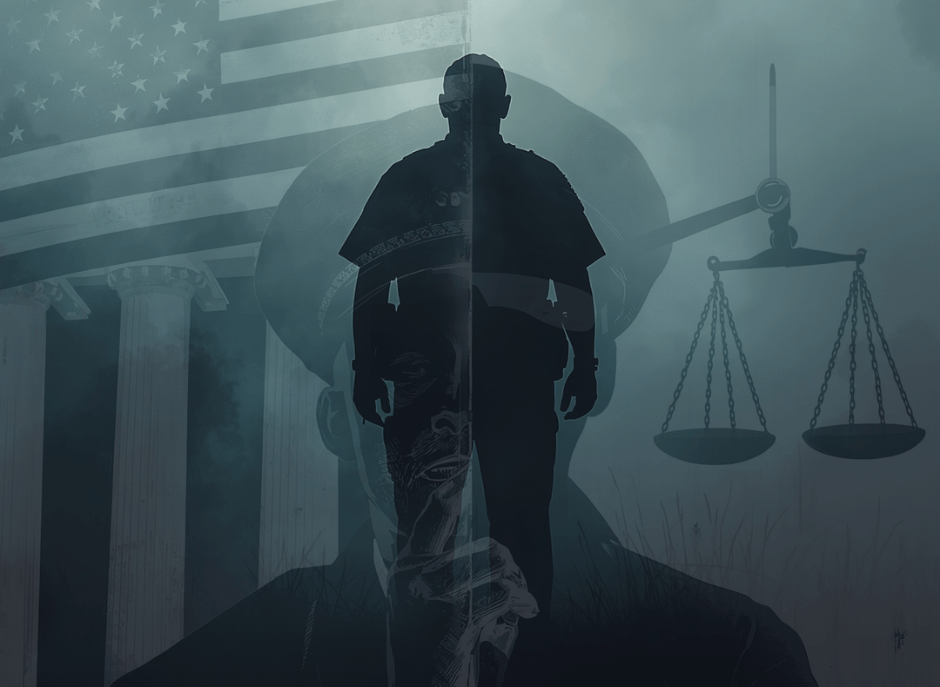
He had given the Sheriff’s Office twenty‑six years. Two decades of night shifts, narcotics work, K9 deployments, hurricanes, and the kind of calls that stay with you long after the paperwork is done. He wasn’t a rookie. He wasn’t a problem employee. He wasn’t someone who needed to be watched.
He was a Major.
And then one afternoon, according to the lawsuit he filed in federal court, everything changed.
Colonel Whaley stepped into his office and presented him with an internal incident report naming him as a suspect. The allegation: that he had sent “covert” (hidden) text messages to a deputy about her employment status. The complaint states he had never been directed to message her, never disclosed confidential information, and never violated policy. The report, he alleges, was “contrived” (manufactured).
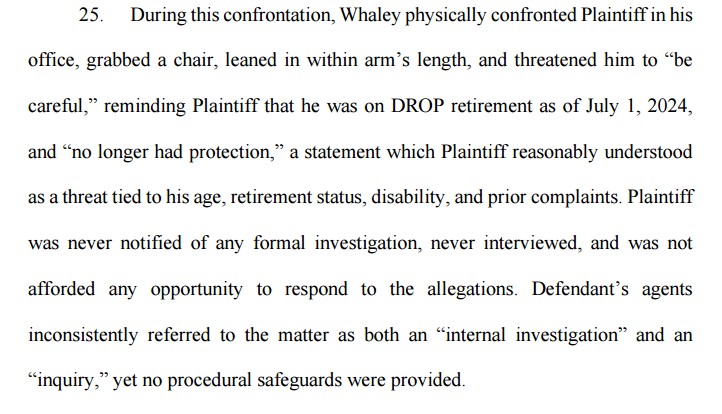
During the confrontation, the filing says Whaley positioned himself close, reminded him he was in DROP retirement, and told him to “be careful.” The Major interpreted the comment as a warning tied to his age, disability, and prior complaints.
It was the moment where years of quiet shifts in treatment began to take a different shape.
The Diagnosis and the Shift
According to the complaint, the turning point began years earlier.
In 2018, the Major disclosed his Parkinson’s diagnosis to Sheriff Miller and the Undersheriff. He continued working and continued performing the essential functions of his job. But shortly after the disclosure, the filing states he was removed from his K9 position, reassigned to traffic enforcement, and then moved again into administrative duties.
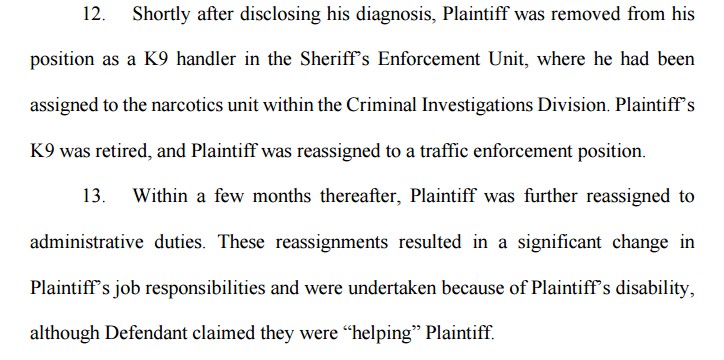
He also began hearing comments. A Victim Advocate told him management referred to him as a “liability.” A coworker’s partner allegedly said he should be terminated because of his Parkinson’s. Younger officers, according to the filing, made remarks about “getting rid of the old Wakulla.”
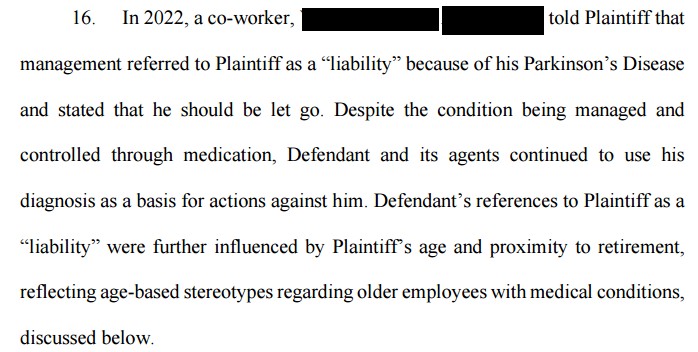
The complaint says he continued working, continued managing his condition, and continued reporting to duty. But the environment around him was changing.
Reporting Misconduct
The Major’s lawsuit outlines multiple incidents he reported internally:
sexual harassment he witnessed
verbal abuse directed at other employees
discriminatory comments
hostile work environment concerns
In February 2023, he submitted a formal written complaint to Human Resources and the Undersheriff. HR acknowledged receipt. According to the filing, no corrective action followed.
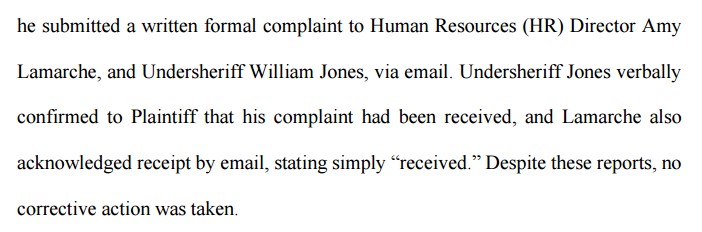
After filing the complaint, the lawsuit states he was told the Sheriff didn’t trust him. He was accused of being a racist - a claim the complaint describes as fabricated and retaliatory.
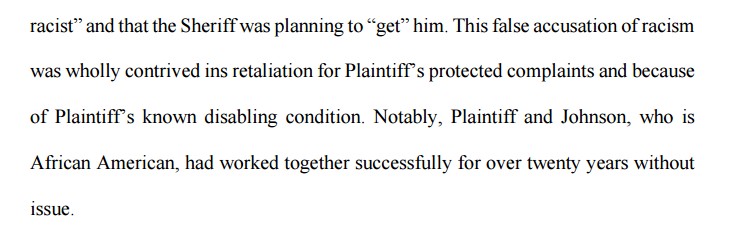
He filed another complaint. Again, the filing says no meaningful action was taken.
The Text Message Incident
The confrontation in his office was tied to the allegation that he had improperly texted a deputy about her employment status. The complaint states:
he never disclosed investigative information
he never violated policy
the information the deputy referenced came from others inside the agency
he was never interviewed
he was never given a chance to respond
the report was used to target him
Shortly after, the filing says the Sheriff’s Office escalated the matter into a criminal investigation. A detective sought a warrant for his arrest. The State Attorney’s Office declined to issue it.

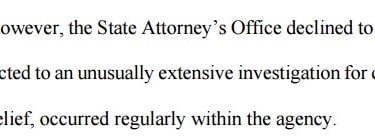
The complaint notes that similar conduct occurred regularly within the agency without consequence.
Isolation and Surveillance
After the confrontation, the lawsuit alleges a series of events that intensified the retaliation:
Colonel Whaley stopped communicating with him directly and routed all communication through captains.
Detectives began driving by his home in an unmarked vehicle.
He reported the drive‑bys; the agency closed the matter without action.
Family members of a detective stopped in front of his home and took photographs.
Anonymous Facebook posts appeared calling him “crazy,” a “POS,” and accusing him of trying to provoke the agency.
The Office of Professional Standards declined to investigate the posts.
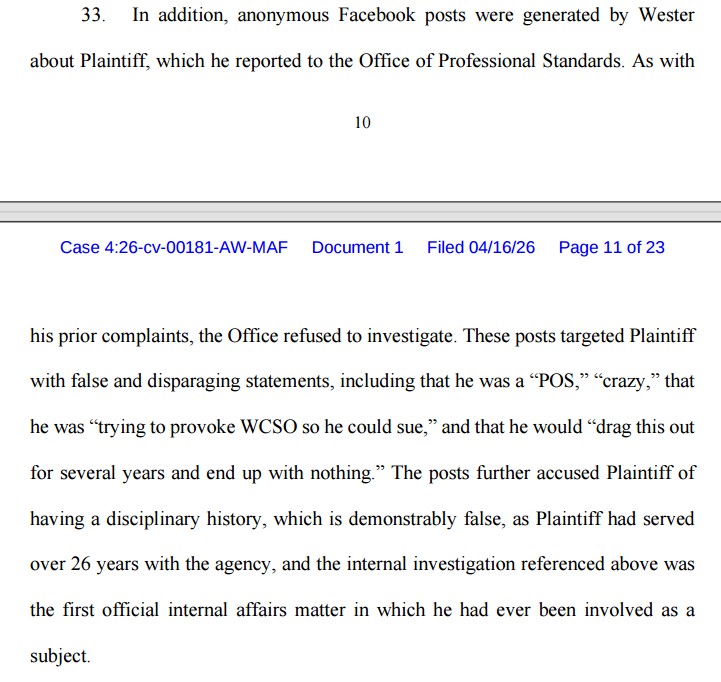
Each of these details appears in the complaint as part of a pattern of intimidation and retaliation.
The August 11 Email
On August 11, 2025, the Major sent an email reporting:
fraudulent timekeeping
policy violations
leadership failures
misuse of public resources
He sent it to Colonel Whaley and Sheriff Miller. Three days later, he was suspended.
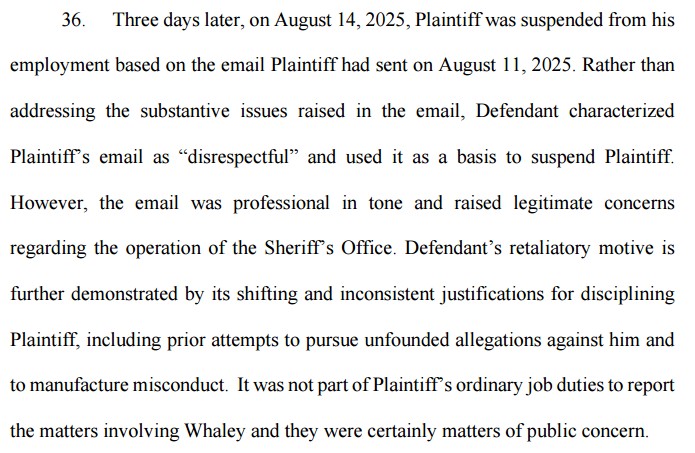
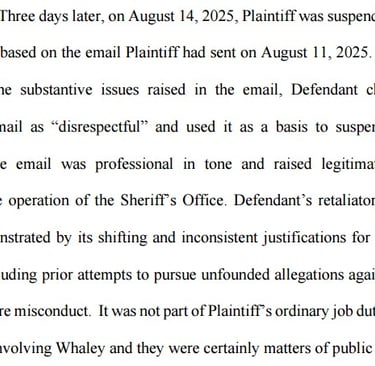
During an interview conducted by the Leon County Sheriff’s Office, an investigation initiated solely because of his email, a Major testified that WCSO leadership had instructed him to “go back three years” and “dig” for negative information about Evans..
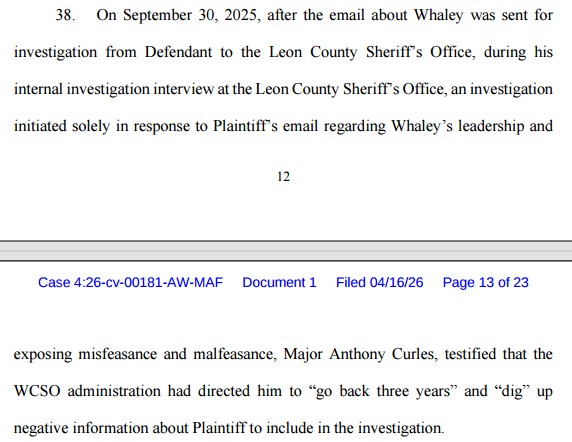
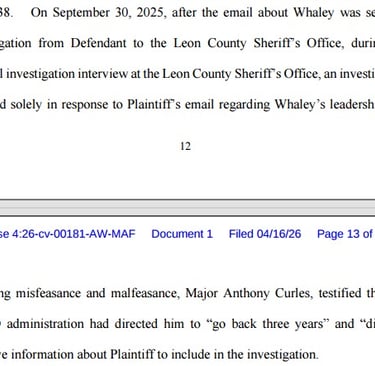
That statement is included in the complaint as evidence of pretext.
Termination
On December 11, 2025, the Major was terminated. The stated reason: the August 11 email.
The complaint alleges the real reason was retaliation for:
reporting sexual harassment
reporting discrimination
reporting policy violations
reporting misuse of public resources
reporting misconduct by supervisory personnel
engaging in protected First Amendment speech
The filing describes the termination as the culmination of a pattern of discrimination and retaliation based on disability, age, and protected activity.
Why This Case Matters to the Public
The Major’s lawsuit is not only an employment dispute. It raises questions that extend far beyond one person’s career. The allegations describe how a high‑ranking member of the Sheriff’s Office was treated after reporting misconduct, discrimination, and policy violations. When someone with his tenure, rank, and institutional knowledge says he faced retaliation for speaking up, it becomes a matter of public concern because it speaks to how the agency responds to internal accountability.
The complaint outlines a pattern of reassignment, isolation, surveillance, and escalating investigations that followed his reports. Whether these allegations are ultimately proven in court, they describe an environment where reporting problems inside the agency allegedly resulted in consequences for the person making the report. The lawsuit also alleges that internal investigations were used selectively, that some employees were disciplined while others were not, and that leadership directed investigators to search for negative information about him after he raised concerns. The filing further describes comments about age, disability, and retirement status, as well as the handling of his medical condition. These allegations relate to how the agency treats long‑serving personnel and whether workplace protections are applied evenly.
Finally, the Major’s case matters because it parallels themes raised in the couple’s civil rights lawsuit. One case comes from outside the agency. One comes from within. Both describe retaliation after protected activity. Both describe intimidation. Both describe a lack of corrective action.
When two separate lawsuits, filed by people in very different positions, describe similar patterns, it becomes a public question rather than a private dispute.
The Major’s case stands at the intersection of authority and accountability. It describes what happens when someone inside the system raises concerns about how that system operates. It describes the consequences he says he faced for speaking up, the investigations that followed, and the environment that formed around him as he continued to report misconduct. And it describes a culture where the response to internal criticism, according to the filing, was not correction but retaliation.
When viewed alongside the couple’s lawsuit, the picture becomes larger than any single incident. One case shows what happened to citizens. The other shows what happened to a high‑ranking employee. Both describe retaliation. Both describe a lack of meaningful response when concerns were raised.
Part Three is not the end of the story. It is the point where the internal and external narratives meet. And it sets the stage for the final question this series will explore:
If these two cases, from two different vantage points, describe the same pattern, what does that say about the culture of the institution at the center of them both?
Stay sharp, Wakulla! Final blog drop next week!

Follow Us on Social
Facebook brings you bite-sized written content, sticky-note facts, and rolling updates you can share and discuss.
NEW! TikTok You can now follow Wakulla Reports on TikTok for quick updates and BOCC video clips.
YouTube is updated less often but does still exist for historical value and for longer videos as necessary.
Prefer to browse at your own pace?
Bookmark our website and visit anytime for fresh posts, resources, and real-life examples from right here in Wakulla County.
© 2026. All rights reserved.
Sign Up for Updates!
By submitting my information below I agree to receiving emails from Wakulla Reports.