
“Adults Actually Thought of That”: Inside Wakulla County’s $249 Million Budget Squeeze
A sharp, skeptical look at Wakulla County’s budget workshop, exposing how state mandates, grant obligations, and administrative choices have boxed the county into raising fees instead of trimming spending.
2026BUDGET MEETINGS
Ida B. Wells
7/26/20264 min read
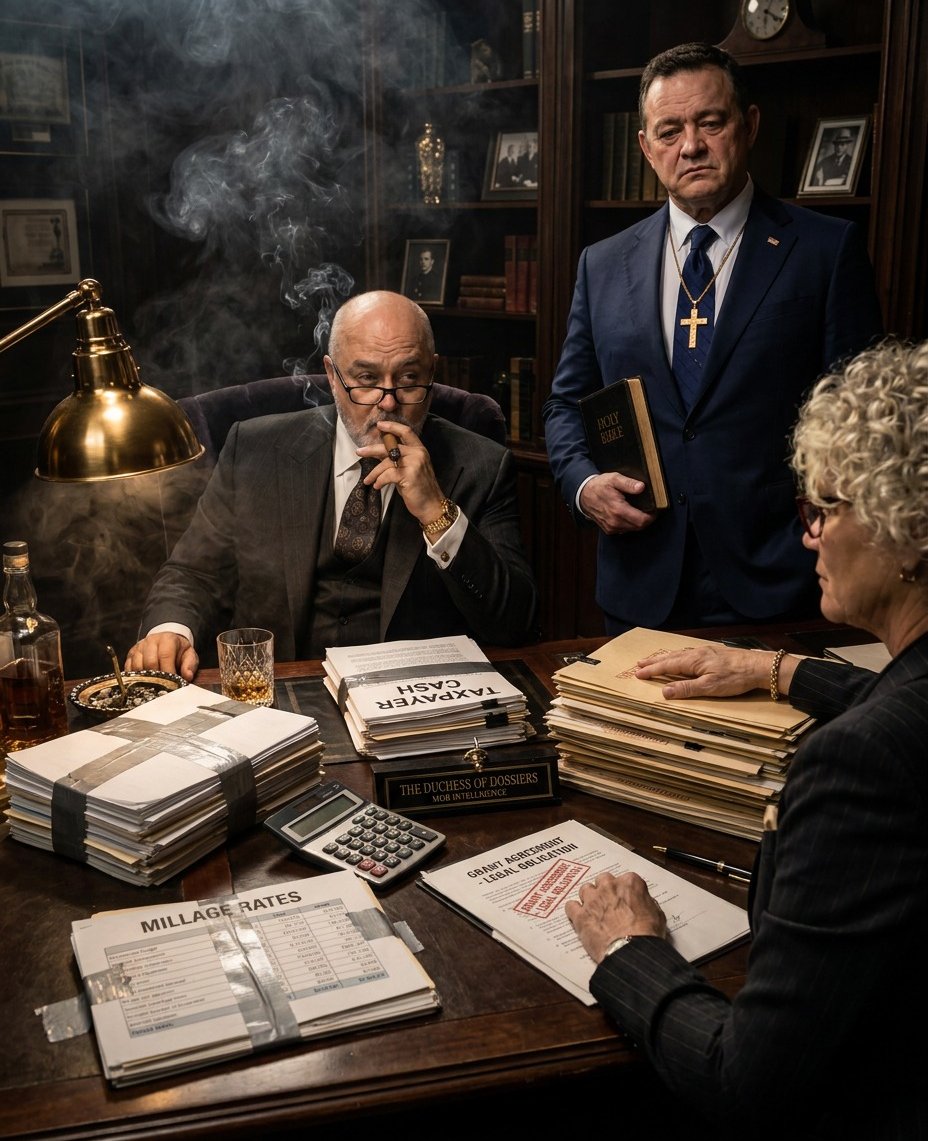
Wakulla County’s second FY 2026–27 budget workshop was supposed to be routine. It wasn’t. What unfolded instead was a two-hour demonstration of how boxed-in this county’s finances have become and how casually county leadership shrugs at the consequences.
Between a bloated grant-driven budget, a new state mandate nobody in the room seems prepared to execute, and a looming property tax reform vote that could detonate the county’s revenue base, the workshop felt less like planning and more like triage.
The Number That is "Subject To"
Finance Director Kelly Graves opened with a headline figure: Budget: $249,656,336, supposedly a 1.6% decrease from last year. Except that’s not the real story. Last year’s budget quietly swelled 8.3% ($19.5 million) after adoption, almost entirely through grant amendments. So no, the county isn’t “shrinking.” It’s just sobering up after a grant binge.
Then comes the kicker: $26.7 million of that top-line number is interfund transfers, money counted twice because government accounting standards says “make it complicated for the public to understand”. Strip that out and the real budget is: $222,937,991. But here’s the part the public rarely hears:
Two-thirds of that - $148 million - is grant-funded. Only $74.5 million is money the county actually controls. Everything else is locked behind grant agreements, federal rules, and state mandates (aka “legal” obligations).
“Adults Actually Thought of That” - The Administrator’s Smug Moment
This matters because of HB 1329, the new “Local Government Financial Transparency and Accountability Act.” Starting next year, Wakulla must publicly perform a 10% budget-cutting exercise every year. Not actually cut, just show how it could cut.
But the law explicitly forbids cutting:
legal obligations
essential services (law enforcement, fire, etc.)
And guess what counts as legal obligations?
Grant agreements. All $148 million of them.
So the entire 10% cut, roughly $25 million, has to come out of the tiny $74.5 million slice of county-funded operations. When this reality was laid out, the county administrator chimed in with: “Adults actually thought of that.”
Delivered with a smirk.
Let’s be clear: He wasn’t calling the legislature adults. He was mocking the legislature while also admitting he has no idea how to comply with the law he’s responsible for implementing. It was the most honest moment of the workshop, and the most revealing. A county boxed in by its own choices, shrugging at a mandate it can’t meet, and joking about it instead of explaining a plan.
Property Tax Reform: The Sword Hanging Over Everything
The November vote on expanding the homestead exemption hovered over the entire workshop like a storm cloud.
If it passes the county estimates:
57% of Wakulla homes will pay zero BOCC property tax by 2028.
The remaining 43%, plus businesses and rentals, will fund 100% of the county-funded budget.
Commissioners spent a good chunk of the meeting trying to plan around a vote, debating whether to hoard cash now or avoid raising fees prematurely. One commissioner summed up the dilemma: “You’re doubling down on the problem at that point in time.” Translation: Cutting millage now is political sugar. If reform passes, it becomes poison.
The Millage, the Fire Fee, and the Fight Nobody Wanted
A commissioner requested dropping the millage to 7.7 mills and holding the solid waste fee flat. That combo costs the county about $718,000. But the real grenade is the fire fee.
Staff acknowledged that the proposed fire fee increase from $263 to $277 is nothing more than a stop‑gap. It doesn’t meet the county’s own recommended transfers, and it certainly doesn’t position the fire fund to survive if property tax reform passes. Under that scenario, the fire fund would have to become fully self‑sufficient, covering not only its direct costs but also reimbursing the general fund for the staff time, administrative support, and shared resources it relies on.
On paper, that’s not an unreasonable expectation, government accounting routinely requires special funds to contribute to the overhead they consume. But the way this conversation unfolded tells you something deeper about the county’s posture: they are far more eager to raise fees on residents than they are to trim spending or restructure operations inside general government. The message from the administration, spoken plainly between the lines, is essentially: you wanted cuts, so you can pay for them.
Under current costs, that means a residential fire fee of:
$375 per year (more than 40% higher than today)
One commissioner offered: “You can’t have the lesser fees and a lesser millage rate. You got to pick your poison.”
By the end, commissioners agreed informally to:
drop millage to 7.7
hold solid waste flat
punt the fire fee to the evening meeting
Classic Wakulla: kick the hardest can down the road.
The Context Nobody Mentioned - But Matters
Not once during the workshop did anyone mention the county’s self-inflicted wound: Wakulla hasn’t collected impact fees since 2011. Impact fees are the one-time charges developers pay to help fund the roads, parks, and infrastructure their projects require. The county commissioned a new impact fee study in 2025. Commissioners criticized it. Then voted unanimously to accept the findings and not fund the next phase.
Impact fees can’t fix operations but they can reduce pressure on the general fund. And Wakulla has chosen, repeatedly, not to use them. That silence speaks louder than anything said in the workshop.
The Bottom Line
This workshop didn’t reveal a reckless board. It revealed a county trapped by:
grant obligations it can’t cut
a shrinking discretionary budget
a property tax reform vote it can’t control
a state mandate it can’t satisfy
and a county administrator who jokes about the mess instead of explaining a plan
HB 1329 guarantees one thing: Every year, Wakulla will have to publicly show the math, the trade-offs, and the absurdity of a budget structure that leaves almost no room to maneuver.
And every year, the public will see exactly how much, or how little, “adults actually thought of that.”
Follow Us on Social
Facebook brings you bite-sized written content, sticky-note facts, and rolling updates you can share and discuss.
NEW! TikTok You can now follow Wakulla Reports on TikTok for quick updates and BOCC video clips.
YouTube is updated less often but does still exist for historical value and for longer videos as necessary.
Prefer to browse at your own pace?
Bookmark our website and visit anytime for fresh posts, resources, and real-life examples from right here in Wakulla County.
© 2026. All rights reserved.
Sign Up for Updates!
By submitting my information below I agree to receiving emails from Wakulla Reports.